



Climate change is raising the stakes for water security in the Indo-Pacific
A regional discussion highlighted how Australia and partners can turn water and climate commitments into real-world progress across the region.

From dust to resilience in Iraq’s Dhi Qar through nature-based solutions
IWMI’s Wiqaya project combines science, field action and community knowledge to implement nature-based water solutions that reduce sand and dust storm risks in Iraq.

Iraq’s Wiqaya initiative and the promise of nature-based solutions
Wiqaya is an IWMI-led initiative with Iraq’s government and local partners to address sand and dust storms through science and community action.

IWMI’s field innovations draw attention at the national farmers’ fair in India
At the Unnat Krishi Mahotsav exhibition, IWMI showcased agroecological, biochar and solar farming models to boost farmer incomes and resilience.

Welfare and water security go hand in hand in India
India’s national rural employment guarantee scheme is advancing water availability and climate adaptation.

India has built an extraordinary foundation of groundwater recharge infrastructure over the past 20 years. The task now is to make it work
IWMI's Mohammad Faiz Alam shares insights on how India can move beyond counting what is constructed to measuring what actually replenishes the country's aquifers.

Lessons from the shoreline
A walk along Chhatiwan Lake in Nepal reveals the intricate connections that sustain life, pointing towards an integrated way of managing natural resources.

How to value Pakistan’s water in a changing climate
A new decision support system serves as a virtual laboratory for determining the economic value of water.

Bangladeshi farmers test solar irrigation as fuel costs bite
In Bangladesh’s farm belt, solar-powered irrigation pumps are promoted as a way to cut diesel use, lower irrigation costs and when pumps are idle, generate extra income for farmers who
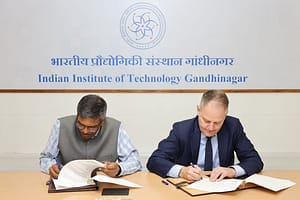
The Indian Institute of Technology Gandhinagar and IWMI partner on water policy research
The collaboration will advance policy research to deliver innovative, sustainable and equitable solutions in response to climate challenges in India.
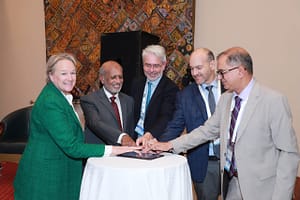
From silos to synergy in Pakistan’s water management
A data-driven model for the Indus Basin connects the traditional world of water allocation planning with new frontiers of artificial intelligence and human cooperation.

Agriculture advisors to bring more Indian farmers towards renewable energy
IWMI taps into India’s deeply rooted farm-advisory networks to build trust in solar irrigation.

The Water Resilience Tracker is reframing climate policy across the Global South
From Nepal and Malawi to Egypt and Brazil, policymakers are making more strategic climate decisions by integrating water into their approaches.
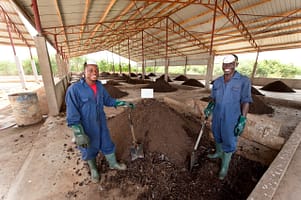
Nothing is waste, only misplaced resources
Organic waste takes center stage this International Day of Zero Waste, but saving scraps is just the beginning.

First-ever Drought Action Plan unveiled to shift from crisis response to risk management
Pakistan has launched its first National Drought Action Plan to transition from reactive crisis management to proactive drought risk management, addressing climate-induced water stress.
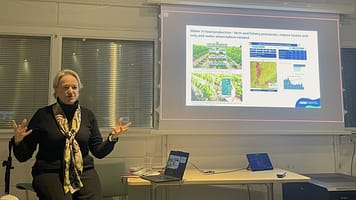
As pressure mounts, water and food security demand action
On World Water Day, IWMI’s Rachael McDonnell reflects on scientific solutions to water and food insecurity, shared in the unique setting of the Cambridge Festival, where art meets science.

Why investing in women is the smartest water decision Africa can make
IWMI's Kehinde Ogunjobi explores how water insecurity and gender inequality reinforce one another, highlighting that inclusion must go beyond representation.

Where water flows, equality grows
This World Water Day, IWMI's Africa Director for Research Impact, Olufunke Cofie, and student Alexandra Wogbe bring drawings of women and water to life.

IWMI Director General Mark Smith on why gender equality is water security
On World Water Day, IWMI calls for a rights-based approach to water and gender.

Why gender equity must shape Africa’s water future
IWMI's Likimyelesh Nigussie highlights that tangible progress depends on putting women’s leadership and perspectives at the heart of water decisions and solutions.

Apply now to scale your water solution in India
IWMI launches National Water Innovation Hackathon to drive youth and community-led solutions in India.

Hydrological insights for farming communities that depend on the Knuckles mountains
IWMI partners with Sri Lankan authorities and the Green Climate Fund to build climate resilience among farmers and agricultural plantation communities.

Women farmers are agents of change, and here’s how development initiatives can support them
Ahead of World Water Day, Inga Jacobs-Mata and Kanwal Waqar reflect on what it takes to strengthen women farmers’ resilience, from understanding their experiences of water insecurity to advancing more

The blessing that flows
In Pakistan’s mountainous communities, gravity-powered pumps provide reliable water supply, helping secure livelihoods and restore dignity.
